Ayurveda for Stress, Burnout & Sleep: A Practical Guide to Kerala Retreats
At some point, the advice stops working. You have tried the meditation app. You have taken the magnesium supplements. You have read the articles about sleep hygiene and created the bedtime routine and still, somewhere between eleven at night and two in the morning, your mind refuses to cooperate. The fatigue has become a texture rather than a feeling, something ambient and constant rather than something that sleep resolves.
This is what burnout actually feels like from the inside. Not dramatic collapse but a slow dimming, a gradual reduction in the capacity to feel rested, engaged, or genuinely present. Modern medicine calls it burnout or chronic stress. Ayurveda, which has been observing and documenting this pattern for several thousand years, has a more specific vocabulary for it and a structured approach to treating it that goes considerably deeper than a weekend off.
Kerala, and specifically the retreats that practice authentic Ayurveda rather than spa-formatted versions of it, is where a growing number of people are going when the standard advice has exhausted itself.
What Ayurveda Actually Says About Stress and Burnout
In Ayurvedic terms, the chronic stress and burnout pattern is primarily a vata derangement. Vata is the dosha associated with movement, nervous system function, and mental activity. When it goes out of balance, which modern life with its constant stimulation, irregular schedules, and information overload is almost designed to produce, the symptoms are precisely the ones that characterise burnout: disrupted sleep, scattered thinking, physical restlessness despite mental exhaustion, anxiety without a specific object, and a digestive system that has quietly stopped working as well as it used to.
The Ayurvedic approach to this is not to add more. It is to systematically reduce, ground, and restore. The treatments work on the nervous system directly, through sustained oil application, heat, and rhythmic pressure, while the dietary protocol and the daily structure of the retreat support the body in the rebuilding phase that has to follow the release phase. The environment matters too, which is part of why Kerala is not incidental to this kind of healing. The landscape, the humidity, the pace, and the cultural relationship with stillness are all part of the therapeutic context.
The Treatments That Matter for Stress and Sleep
Three treatments are particularly central to an Ayurvedic approach to stress, burnout, and sleep disruption.
-
Shirodhara
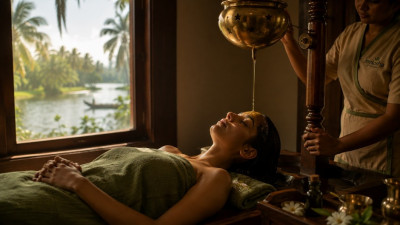
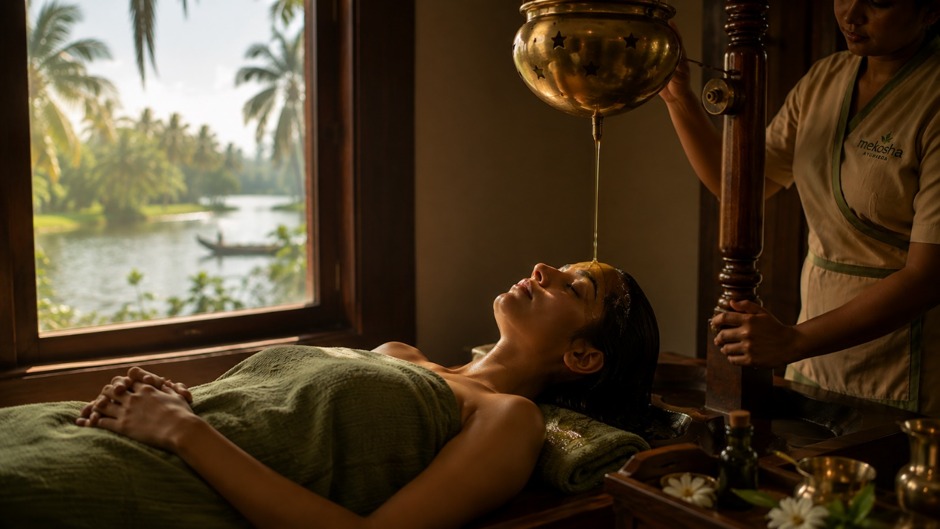
This is one of the treatments most often associated with this category. Warm oil, typically medicated with herbs specific to vata pacification, is poured in a continuous and precisely calibrated stream over the forehead for an extended period. The effect on the nervous system is measurable and the subjective experience is unlike anything else in the treatment repertoire. Guests who have never experienced it tend to describe the afterward as the most rested they have felt in years. It is specifically indicated for anxiety, sleep disruption, and the kind of mental fatigue that does not resolve with rest.
-
Abhyanga
This is a full-body oil massage performed by two therapists working in synchrony, works at a deeper level than ordinary massage. The specific oils used, selected based on your constitution and current imbalance, penetrate the tissues (dhatus) and work on the nervous system through a mechanism that classical Ayurvedic texts describe in detail and that contemporary research on transdermal absorption is beginning to explain in a different language. For burnout specifically, Abhyanga performed daily over a sustained retreat period produces cumulative effects that a single session cannot approach.
-
Nasya
This is the administration of medicated oils through the nasal passage, which directly addresses the vata imbalance that drives mental restlessness and disrupted sleep. It sounds unusual to people unfamiliar with it and is consistently one of the treatments that guests report having the most immediate effect on the quality of their nights.
Why the Setting Matters as Much as the Treatment
A Panchakarma programme for burnout done at a Kerala retreat is not the same experience as the same treatments done in an urban wellness centre, and this is not a subjective preference. The nervous system responds to environment, and an environment designed around stillness, natural sound, and the specific rhythm of life near water and forest is itself part of the therapeutic intervention.
At Mekosha, which sits along four hundred metres of Kerala river frontage near Trivandrum, this understanding is built into every element of how the retreat functions. The eleven suites are sized at six hundred square feet each, with private balconies overlooking the pool and river. Treatments happen in the privacy of each guest’s own suite rather than in a shared treatment facility, which means the transition from treatment to rest is immediate rather than requiring a walk through common areas and a return to social space. The organic garden on site supplies the kitchen directly, which means the Ayurvedic dietary programme runs on genuinely fresh, locally grown ingredients rather than sourced produce.
The daily rhythm of the retreat- early morning routine, treatment session, doctor consultation, personalised meal, rest time, evening meditation, dinner, is itself a form of vata pacification. Vata is destabilised by irregularity. Consistent rhythm, held over seven to fourteen days, begins to recalibrate the nervous system in ways that supplements and apps cannot reach.
What the Reset Actually Feels Like
When arriving at a retreat for burnout, it is important to know how the body responds to the situation. The process of healing from chronic stress is rarely linear and knowing the path of recovery is essential to the process of healing.
If a person arrives with a highly stimulated and tired nervous system, the initial two or three days usually include a dramatic “drop.” When the Ayurvedic treatment begins to calm the vata and the continuous drip of daily adrenaline ceases, people often notice feeling more or heavier exhausted than when they started. In Ayurveda, it is not taken as a sign of a retreat but rather as the body’s first time feeling secure enough to reduce its defenses and recognise its degree of exhaustion.
By the middle of the retreat, when treatments like Shirodhara and Abhyanga are cumulatively effective, the body’s energy shifts. Involuntary muscle tension is released. The mind’s ability to race throughout the night gradually slows down. At the end of the program, the appearance of fatigue is altered, changing from brittle anxiety to a calm, lasting energy. It’s a physiological shift that an ordinary holiday cannot duplicate.
How Long Does It Actually Take
This is the question that most people ask and then resist the honest answer to. Seven days is the minimum for a meaningful Panchakarma programme for burnout and sleep. It takes approximately three days for the nervous system to downregulate enough to begin receiving the treatments at the level they are designed to work at. Days four through seven are when the cumulative effect becomes noticeable. Fourteen to twenty-one days is where the most significant and lasting change occurs.
The resistance to this answer is understandable. People with burnout are also people who are busy and who find it difficult to justify an extended absence. The irony is not lost on the practitioners who work with them.
Guests Reviews:
“It’s a place for rejuvenation for oneself. Treatment was good, food was fabulous, room was awesome and last but not least service was incredible surround by greenery.”
“With a nice pool and greenery surrounding the wellness centre- it is a perfect therapy externally and internally”
If the Standard Approaches Have Stopped Working, This Is What the Alternative Actually Looks Like
Visit: https://mekosha.com
Call: +91 88 0068 8344 or +1 647 720 2222
Email: info@mekosha.com
Frequently Asked Questions
- Can Ayurveda help with burnout and chronic stress?
Yes, Ayurveda specifically addresses burnout through vata pacification treatments, dietary adjustment, and structured daily rhythm over a sustained retreat period. - What is the best Ayurvedic treatment for sleep problems in Kerala?
Shirodhara and Nasya are the most specifically indicated treatments for sleep disruption, typically combined within a personalised Panchakarma programme. - How long should a Kerala retreat for burnout last?
Seven days is the minimum for meaningful results. Fourteen to twenty-one days produces the most sustained and lasting change in nervous system regulation. - Is Mekosha suitable for someone experiencing severe burnout?
Yes, the retreat is specifically designed for guests dealing with chronic stress, burnout, and sleep disruption alongside those seeking general wellness. - What does a doctor consultation at Mekosha involve?
The resident Ayurvedic doctor assesses your constitution and current imbalances on arrival and conducts ongoing consultations throughout the programme to adjust treatments. - Is the food at Mekosha part of the stress and burnout treatment?
Yes, personalised Ayurvedic dietary recommendations are integrated into the programme and the kitchen uses fresh ingredients from the on-site organic garden. - What makes Kerala specifically good for Ayurvedic burnout retreats?
The climate, cultural tradition, quality of practitioners, and environmental stillness of Kerala collectively support the nervous system recovery that burnout treatment requires. - Is Shirodhara safe for everyone?
Shirodhara is safe for most guests. The resident doctor assesses suitability during the initial consultation before prescribing specific treatments. - Can a first-time Ayurveda visitor do a Panchakarma for burnout at Mekosha?
Yes, many guests experiencing Panchakarma for the first time specifically come for burnout or stress-related conditions and the programme is designed to accommodate this. - How do I book a stress and burnout retreat at Mekosha?
Visit mekosha.com, call +91 88 0068 8344, or email info@mekosha.com to discuss programme options and available dates.
Article By:

A guide for UK visitors on how long a Panchakarma detox in Kerala should be. Discover what’s achievable in 7, 14, or 28 days for true Ayurvedic healing.
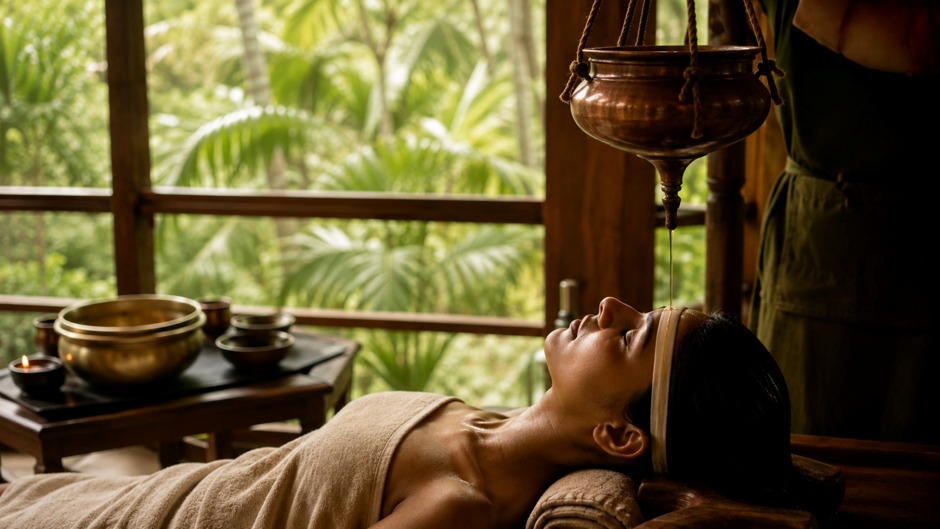
Imagine a continuous, rhythmic stream of warm, herbal oil gently cascading over your forehead, instantly calming your mind and bringing you to a state of complete stillness. This is Shirodhara. A person lies quietly while a steady stream of warm medicated oil flows gently over the forehead for an extended period. The movement is slow, […]
Previous Story
Imagine a continuous, rhythmic stream of warm, herbal oil gently cascading over your forehead, instantly calming your mind and bringing you to a state of complete stillness. This is Shirodhara. A person lies quietly while a steady stream of warm medicated oil flows gently over the forehead for an extended period. The movement is slow, […]
Next Story
A guide for UK visitors on how long a Panchakarma detox in Kerala should be. Discover what’s achievable in 7, 14, or 28 days for true Ayurvedic healing.
Recent Posts