Benefits of Panchakarma Treatment: Why More Wellness Travellers Are Choosing Kerala Ayurveda Retreats During Monsoon
There is a reason Ayurvedic doctors have pointed to the monsoon as the best time of year for Panchakarma for centuries, long before anyone was searching for it online. The air turns humid, the pores of the skin stay naturally open, and the body, cooled and slowed by the rain outside, becomes far more receptive to the kind of deep therapeutic work that Panchakarma is built around. It is not a coincidence that the season most people associate with staying indoors is the same season Ayurveda considers ideal for finally doing something serious about how you feel.
Panchakarma has quietly moved from being a niche interest among Ayurveda purists to something that comes up in regular conversation among people who are simply tired of feeling tired. Not sick exactly, just worn down in a way that a long weekend never seems to fix. And increasingly, when people start looking into it seriously, they end up looking at Kerala specifically, and at retreats like Mekosha that have built their entire approach around doing this properly rather than offering a watered-down version with a nice view. Many of them, once they start asking practitioners when to actually go, are told the same thing, that the monsoon months are when this kind of treatment works hardest in your favour.
So what is it, actually
Panchakarma literally means five actions, and it refers to five classical Ayurvedic procedures used to clear out what Ayurveda calls ama, essentially the buildup of toxins that accumulates in the body over years of poor digestion, stress, bad sleep, and just living in the modern world. The five procedures themselves, Vamana, Virechana, Basti, Nasya and Raktamokshana, sound intense on paper, and a few of them are. But a well run retreat does not throw every guest through all five in their harshest form. A qualified doctor looks at your constitution, your current state, and what your body actually needs, and builds something specific to you.
There is a structure to it though. First comes the preparation phase, where oil massages and steam work start loosening things at a deeper level than you would expect from what looks, from the outside, like a fancy spa treatment. Then comes the actual cleansing, the part that does the heavy lifting. And then, just as important but often skipped by lesser programs, comes the rebuilding phase, where diet and rest help your body settle into its new baseline instead of bouncing straight back into old patterns the moment you go home.
This is also why it takes time. A single afternoon session is not Panchakarma, no matter what the brochure says. Real programs run somewhere between a week and three weeks, because that is genuinely how long the body needs to let go of what it has been carrying, and Ayurvedic doctors will often tell you that the monsoon window, when the air is cool and humid, is when the body is most willing to let that happen.
What people actually notice
Ask anyone who has gone through a proper program what changed, and digestion almost always comes up first. In Ayurveda, your digestive fire, agni, is treated as the foundation of most other health issues, and a lot of guests describe feeling lighter within the first week, not in a vague spiritual sense but quite literally, like something that had been sitting heavy for years finally moved.
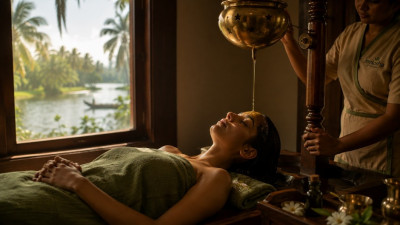
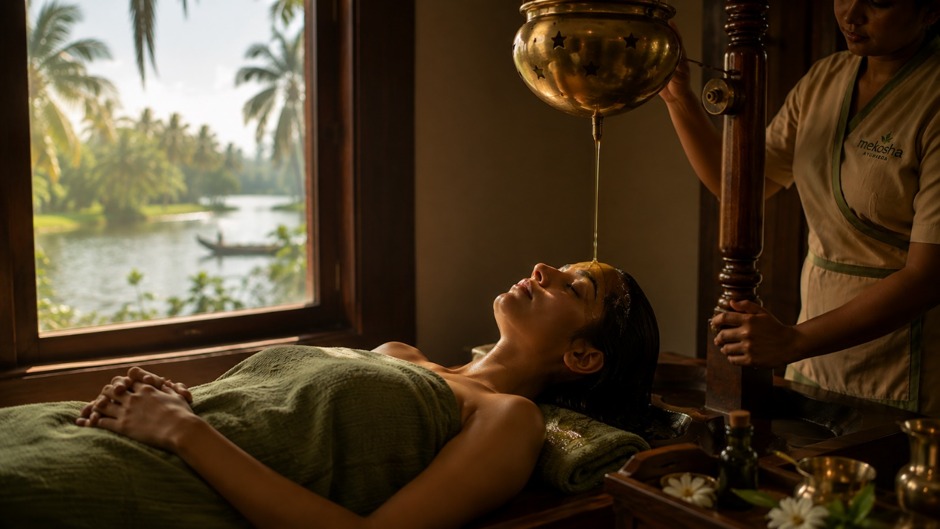
Sleep is the other one people mention constantly. There is a treatment called Shirodhara, where warm oil is poured slowly and continuously over the forehead, and it sounds almost too simple to do much. But the effect on the nervous system is real, and combined with the slower daily rhythm of an actual retreat, people often say they slept better in that first week than they had in the past two years. There is something about doing this with rain falling steadily outside, rather than under a hot sun, that seems to deepen that effect even further.
Beyond that, the list tends to include better skin, looser joints, steadier moods, less anxiety humming in the background. But honestly, the thing that comes up most in conversations with people who have done this seriously is something harder to put into words. They just say they felt different afterward. Calmer. More like themselves, but a version of themselves they had not felt in a while.
Why everyone keeps pointing to Kerala
There is a reason so many of these conversations end up circling back to Kerala specifically, rather than just Ayurveda treatments anywhere in India. The climate here genuinely suits this kind of bodywork, and never more so than during the monsoon, when the humidity keeps the skin’s pores naturally open and oils absorb more deeply into the tissue than they would in drier weather. The herbs and oils used are often sourced locally and fresh, not shipped in from somewhere else. And the knowledge runs deep, often passed down through traditional gurukula style training rather than picked up from a weekend certification course.
People who have tried a half-hearted Panchakarma elsewhere and then experienced the real thing in Kerala tend to notice the difference almost immediately. It is not subtle. At Mekosha, this shows up in small but telling details, treatments happen in the privacy of your own suite rather than walking down a hallway to a shared spa room, and a doctor actually checks in with you regularly throughout the program rather than handing you a fixed package on day one and disappearing. The retreat sits along the Kerala backwaters just outside Trivandrum, and that setting is not just nice scenery, it genuinely changes how easily you can let go and actually be present for the process, particularly when the monsoon turns the whole property quieter and greener than at any other time of year.
People Also Ask
What are the main benefits of Panchakarma treatment?
It helps clear out accumulated toxins, improves digestion, supports deeper sleep, eases stress, and brings the body’s doshas back into balance over time.
How long should a Panchakarma program actually last?
Genuine programs typically run between seven and twenty one days, since the body needs that stretch of time to detox properly and then rebuild.
Why do people specifically choose Kerala for Ayurvedic detox?
Kerala has an unbroken tradition of Ayurvedic practice, a climate well suited to this kind of bodywork, and practitioners trained through generations rather than short courses.
Is Panchakarma something a first timer can do safely?
Yes, with a proper doctor consultation guiding the process, it can be adapted comfortably even for someone trying Ayurveda for the very first time.
What guests have said
“The best Ayurveda Retreat in Kerala!! Serene and peaceful. Beautiful property on a lush ground. Each room has their own treatment room. Very clean, the food so delicious, and very friendly staff.”
“A dream come true was my experience at Mekosha! The one week Unlimited Ayurveda therapy was very rejuvenating. The Doctor and all staff were very welcoming, kind and caring! The food was very healthy and served with so much of love.”
For Booking :
Visit: https://mekosha.com/bookings/
Phone : +918800688344 |+16477202222
Email : info@mekosha.com
Frequently Asked Questions
- What does Panchakarma actually mean?
It means five actions, referring to the five classical Ayurvedic procedures used to remove toxins and restore the body’s natural balance. - How does it help with digestion specifically?
It works directly on restoring digestive fire, which Ayurveda treats as the root cause behind most digestive struggles. - Is this the same as a normal spa detox weekend?
Not really. Panchakarma is doctor guided and medically structured, which is quite different from a standard spa cleanse package. - Can it genuinely help with stress and anxiety?
Many guests report this. Treatments like Shirodhara have a calming effect on the nervous system that people notice fairly quickly. - What is a realistic length for a proper program?
Somewhere between one and three weeks is typical for the body to detox fully and then stabilize afterward. - Does Mekosha involve regular doctor check ins?
Yes, guests are assessed on arrival and the program is adjusted along the way based on how their body is responding. - Why does Kerala come up so often in this conversation?
Generations of unbroken Ayurvedic tradition, the right climate, and deeply trained practitioners make it hard to match elsewhere. - What changes can someone realistically expect afterward?
Better digestion, deeper sleep, clearer skin, and for a lot of people, simply feeling more like themselves again. - Is it suitable for someone going completely solo for the first time?
Yes, plenty of guests travel alone for this and describe feeling genuinely cared for throughout the experience. - How would someone go about booking this at Mekosha?
The available programs and booking details are on the official Mekosha website.
Article By:

A guide for UK visitors on how long a Panchakarma detox in Kerala should be. Discover what’s achievable in 7, 14, or 28 days for true Ayurvedic healing.
At some point, the advice stops working. You have tried the meditation app. You have taken the magnesium supplements. You have read the articles about sleep hygiene and created the bedtime routine and still, somewhere between eleven at night and two in the morning, your mind refuses to cooperate. The fatigue has become a texture […]
Previous Story
There is a particular kind of tiredness that does not go away with sleep. It sits in the body for months, sometimes years, showing up as low energy, disturbed digestion, restless nights, or a mind that never quite switches off. Most people try to manage it with more coffee, another supplement, a weekend off. Very […]
Next Story
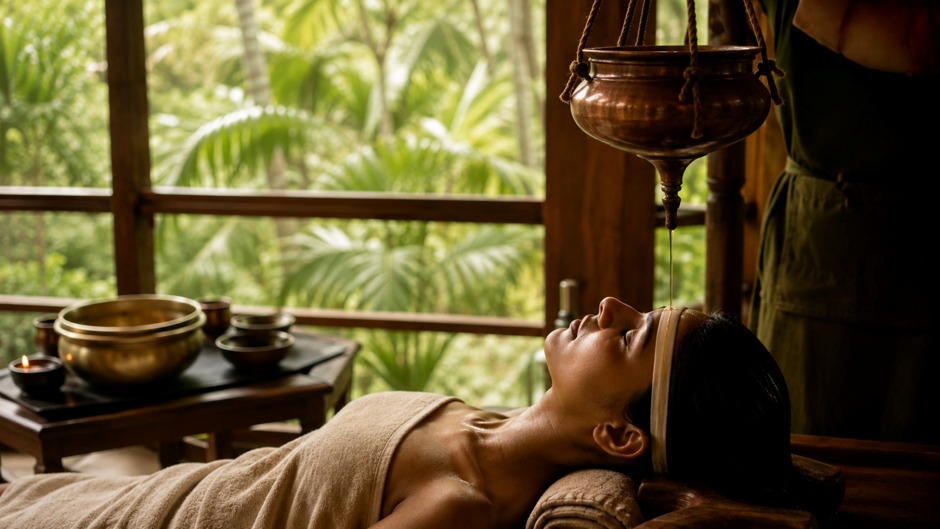
Imagine a continuous, rhythmic stream of warm, herbal oil gently cascading over your forehead, instantly calming your mind and bringing you to a state of complete stillness. This is Shirodhara. A person lies quietly while a steady stream of warm medicated oil flows gently over the forehead for an extended period. The movement is slow, […]
Recent Posts